


If you think Tuscan food is all about big steaks and fancy restaurants, the top 5 Tuscan foods in Pisa are about to gently correct you. Here, food stays humble and seasonal, and it grows straight out of everyday life, because necessity shaped it long before luxury did.
People usually come to Pisa with a postcard image in mind. However, the city explains itself just as clearly through food: recipes that the land and history shaped, and that families refined very early, because they learned that nothing should go to waste.
In this guide, I’ll walk you through the five dishes that tell that story best. They’re not trendy. In fact, they’re real, and once you taste them with the right context, they stay with you.
The Tagliere: A Tradition Meant to Be Shared
In Italian, tagliere literally means “cutting board.”
In real life, though, it means something closer to: sit down, relax, and don’t pretend you’re in a hurry.
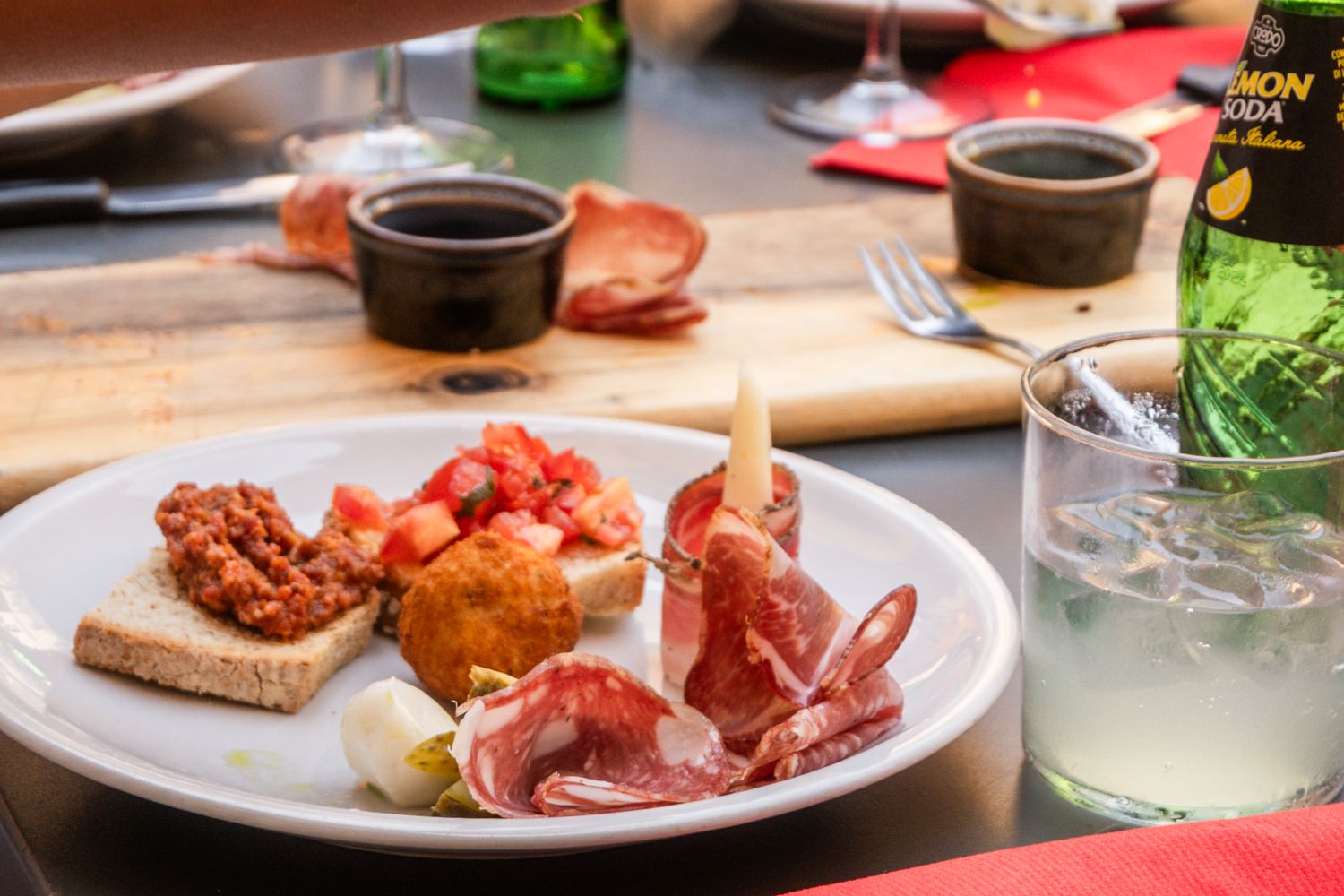
The tagliere didn’t start as a stylish dish. Instead, it started as a practical habit in rural Italy: a wooden board in the center of the table, holding whatever the family had, from cured meats and cheeses to bread and seasonal products. In Tuscany, it often appeared during merenda, that quiet moment between afternoon and evening that slowly turns into dinner if the conversation is good enough.
Over time, the tagliere moved from home kitchens to trattorie and wine bars. Still, it never lost its meaning. It’s about sharing, about slowing down, about letting food create space for people.
Why Tuscan Bread Has No Salt
Tuscan taglieri have a very precise character. The flavors tend to be bold and rustic. Cured meats often carry more salt and aroma than travelers expect, and that intensity explains one of Tuscany’s most misunderstood traditions: bread without salt.
Pane sciocco wasn’t a culinary choice at first. It was history. Because Tuscany taxed salt heavily during the Middle Ages, bakers adapted. Over generations, that adaptation became balance. Unsalted bread doesn’t compete with food. Rather, it absorbs flavors, and it lets cured meats and cheeses speak clearly.
On the table, the tagliere unfolds naturally. Pecorino Toscano changes character depending on how long it ages: sometimes young and milky, sometimes firmer and more assertive. Crostini arrive warm, just as they should. Tomato and olive oil on one. Something richer and slow-cooked on another. Sometimes there are polpette, because Tuscan food has never obsessed over categories. It has always obsessed over what makes sense.
The tagliere is never identical. And that’s exactly why it works.
Pappa al Pomodoro: Why This Is Not a Soup
Calling pappa al pomodoro a “tomato soup” doesn’t really work in English. And that misunderstanding matters.
In Italian, pappa describes the soft food that parents give very small children: something nourishing, thick, spoonable. Pappa al pomodoro takes its name because that’s exactly what it becomes.
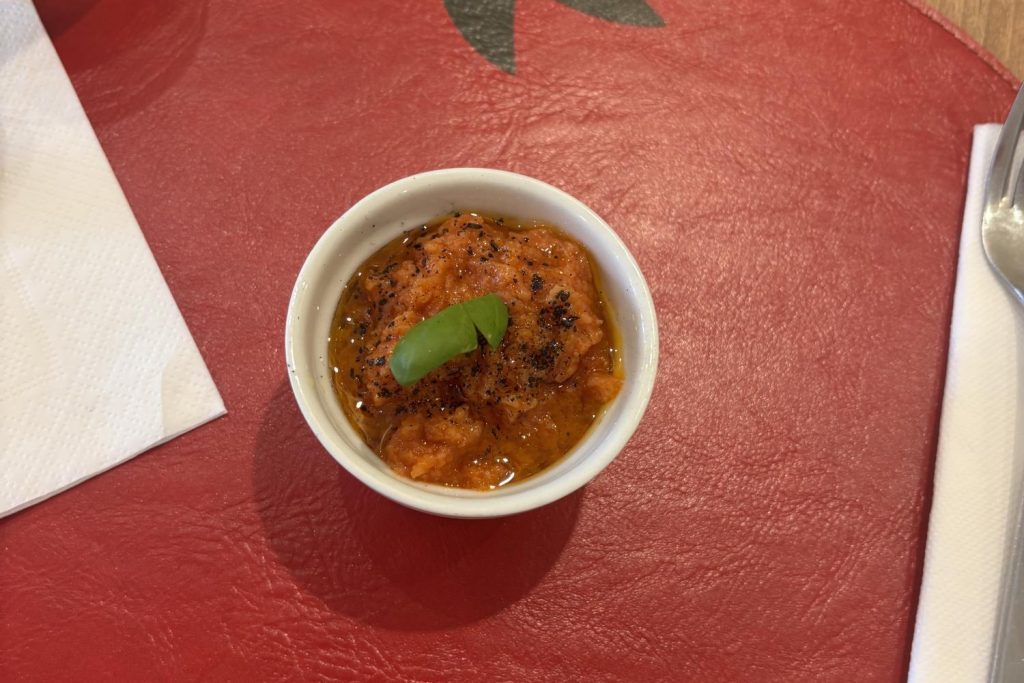
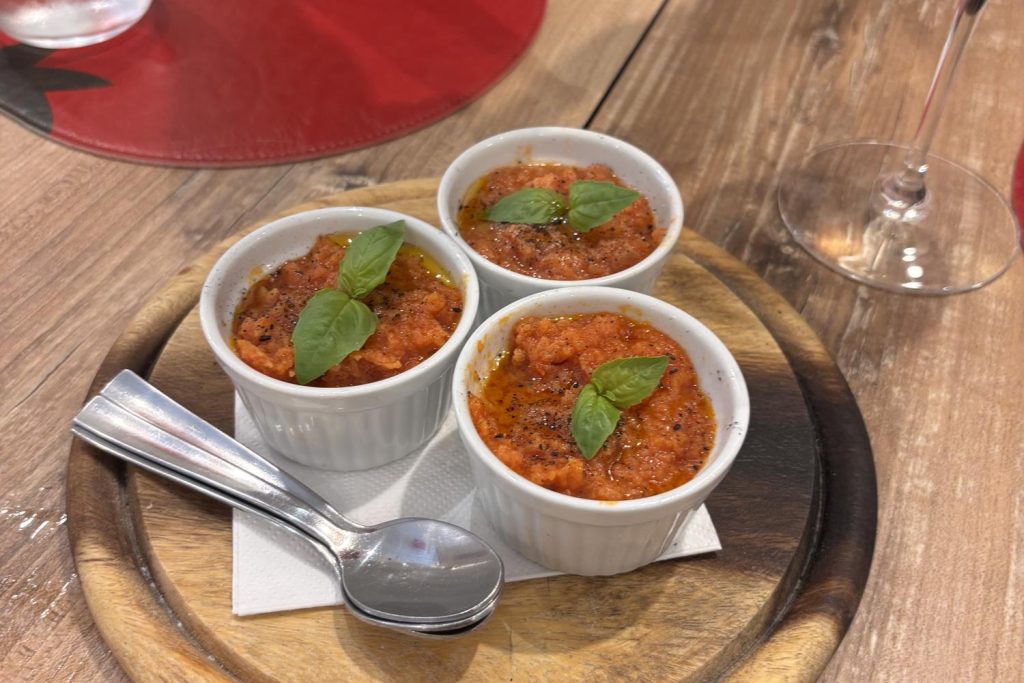
The method is simple and very Tuscan. Stale bread cooks slowly with ripe tomatoes, garlic, basil, extra-virgin olive oil, and a bit of water. The bread doesn’t float in liquid. Instead, it breaks down and soaks up the tomato. Over time, everything turns into a velvety, dense consistency, closer to a warm bread cream than to a soup.
This dish belongs to cucina povera, the traditional cooking of necessity. Nothing goes to waste, and time does most of the work. Traditionally, cooks simmered pappa al pomodoro slowly, often in terracotta pots, and finished it with generous olive oil. Families ate it hot or at room temperature, usually at home, rarely in restaurants.
Where We Taste It
What makes this tasting truly special is where it happens.
The tasting itself happens at the ristoro of Fattoria Le Prata, a farm with its own fields just outside Pisa. Le Prata is a family-run organic farm that has cultivated the land with a deep respect for biodiversity and agroecology. Their vision is clear: protect the soil, and reconnect producers directly with the people who eat what they grow.
Here, Farm to Fork isn’t a slogan. It’s daily life.
The bread is theirs. So is the garlic. The tomatoes come from their fields, and so does the olive oil.
When you taste pappa al pomodoro here, you’re tasting comfort food at its highest possible level, because the family that cooks it built its whole philosophy around the land. In short, nobody makes a better version than the people who live this close to the ingredients.
Cecina: One Recipe, Many Names, One Coastal Obsession
Along the Italian coast, this food changes name every few hundred kilometers.
In Genoa, it’s farinata. Nice calls it socca. Parts of Liguria say fainà. In Pisa, though, it’s simply cecina, and locals are very serious about that.
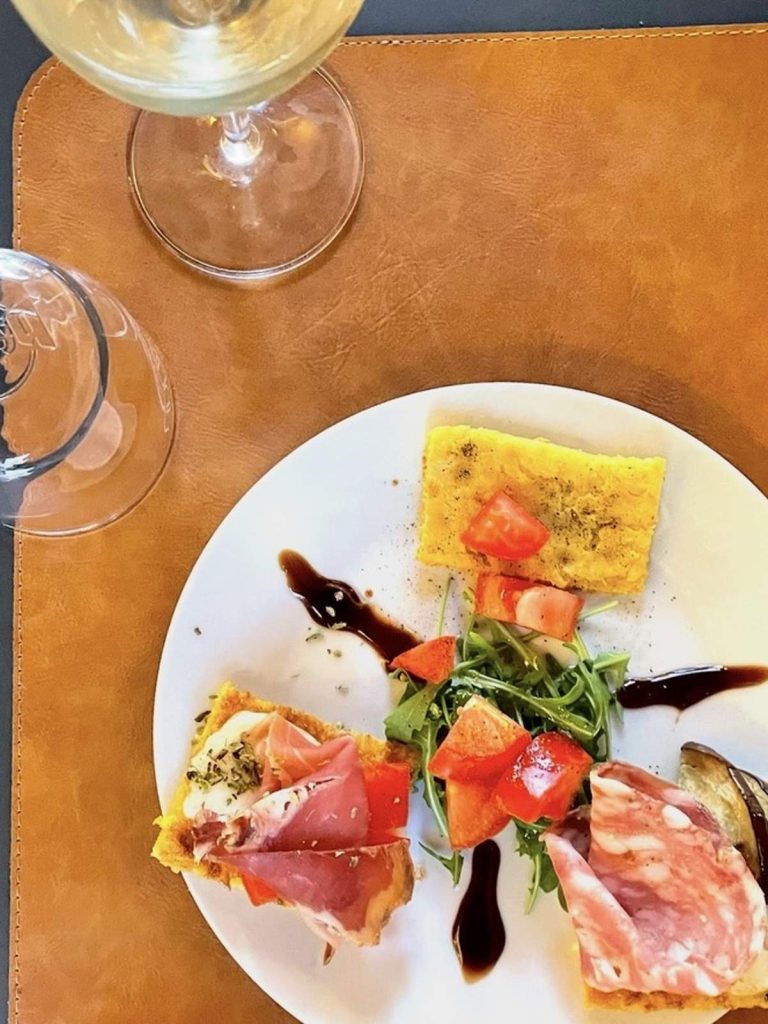
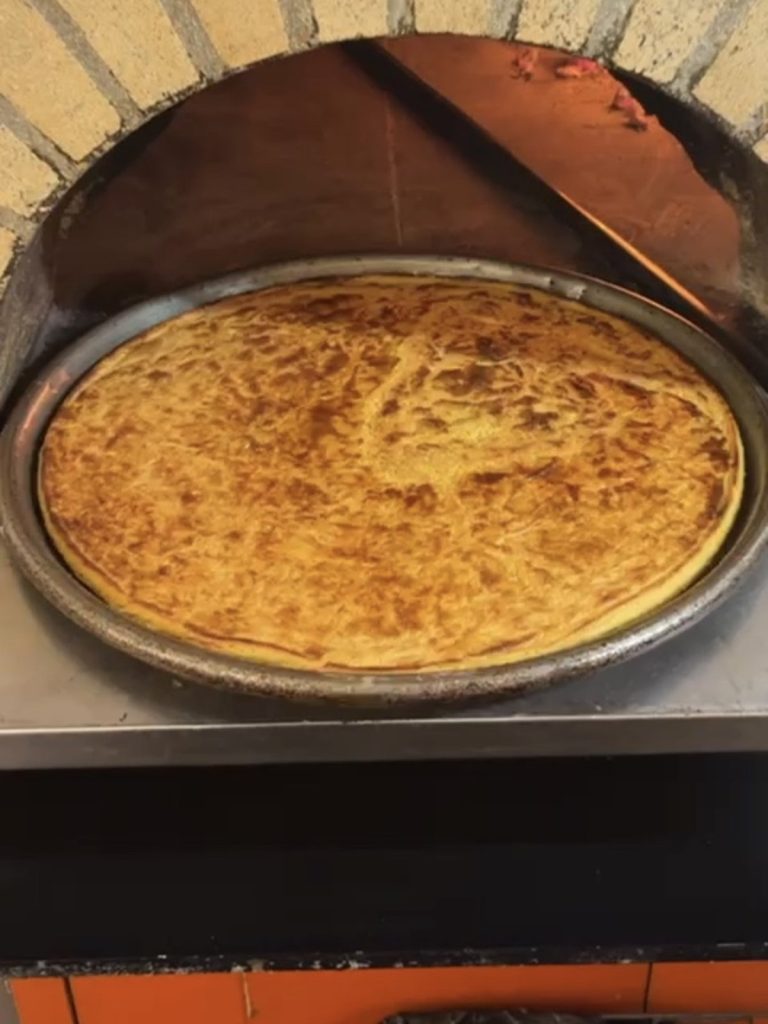
The recipe is deceptively simple: chickpea flour, water, salt, and extra-virgin olive oil. But the story behind it is long and layered. Versions of this dish appear in ancient Greek and Latin culinary traditions, long before it became street food.
The Legend of the Battle of Meloria
The most famous legend places its birth in 1284, after the Battle of Meloria. During a storm, Genoese ships spilled sacks of chickpeas and barrels of oil, and seawater soaked the mixture. With little else to eat, sailors tasted what the sun had dried. Hunger did what hunger always does: it made it taste good.
Back on land, the Genoese refined that accidental creation in their ovens. The result was cecina. Or farinata. Or socca. Depending on where you were standing.
Because Genoa had defeated Pisa, they sarcastically called it “the gold of Pisa.” Pisa took the joke, kept the food, and made it part of everyday life.
Cecina became essential food: cheap, filling, nourishing. People ate it standing up, often from bakeries, sometimes inside bread. Not restaurant food. Local food.
Ask around and Pisans will send you to different bakeries depending on the neighborhood, but Il Montino, three generations deep into getting cecina right, comes up more than most.
Pisans still eat cecina three ways today. First, in its purest form, with just salt and pepper. Second, in a more traditional local variation with vegetables. Finally, in a modern version with cheeses or cured meats, because traditions survive by evolving, not by freezing.
Just chickpea flour, water, salt, and oil, in the oven until the edges turn dark. Nothing about it needs updating.
Bomboloni: Tuscany’s Soft Spot for Sugar
People often describe a bombolone as an Italian donut, but that comparison only goes so far.
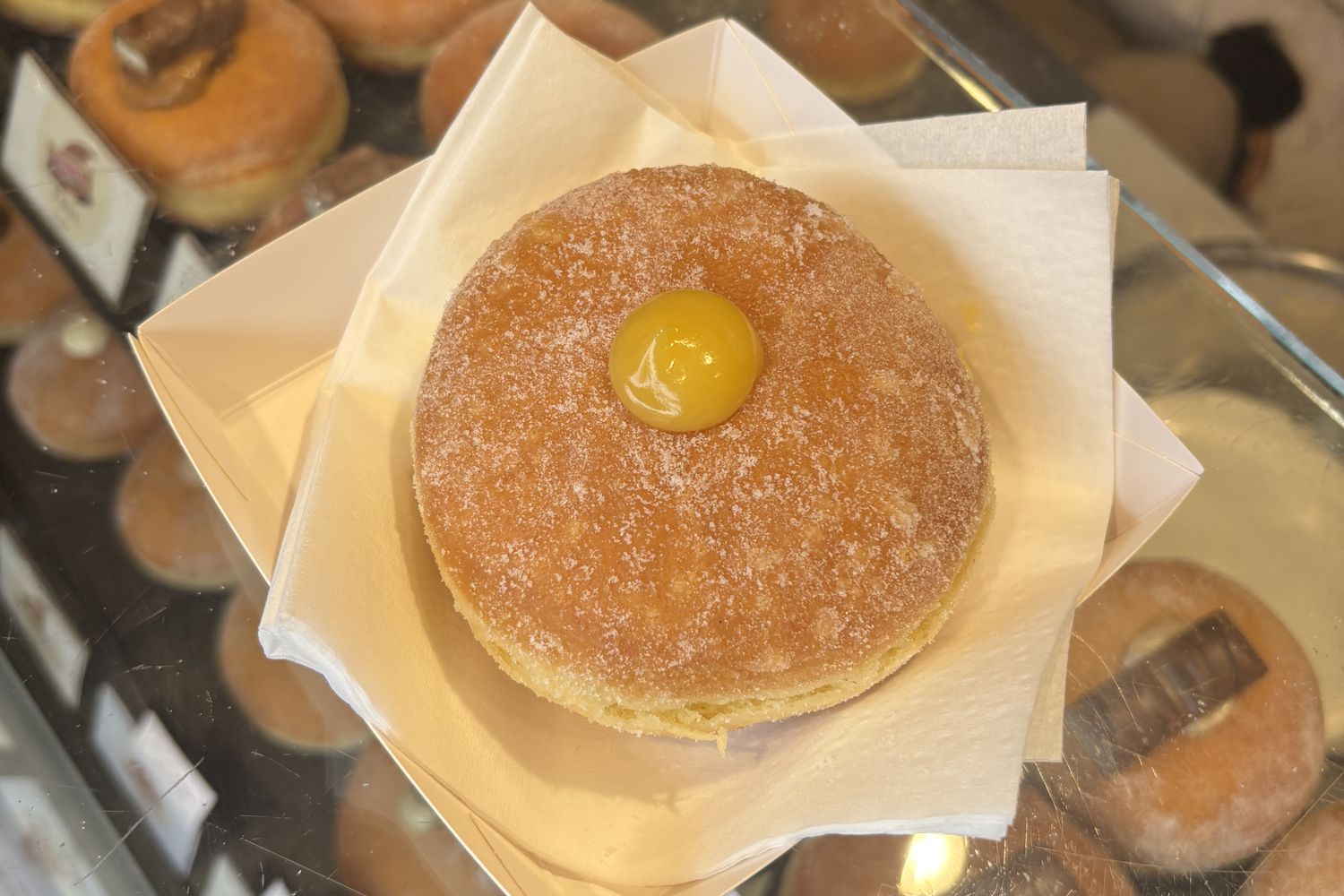
Bomboloni start as a soft, yeasted dough that rises slowly and then hits the fryer. There’s no hole in the middle. Instead, the filling goes in after frying, traditionally pastry cream, but also chocolate or seasonal flavors.
They wear a dusting of sugar rather than a glaze. They arrive warm, and they don’t try to look elegant.
In Tuscany, bomboloni are a simple pleasure. They belong to bakeries, to mornings, to late afternoons. A good bombolone stays light and deeply satisfying, because fermentation, time, and proper frying do all the work. No tricks.
And yes, you’ll probably end up with sugar on your hands. Of course, that’s part of the deal.
Gelato: How Italy Learned to Freeze Flavor
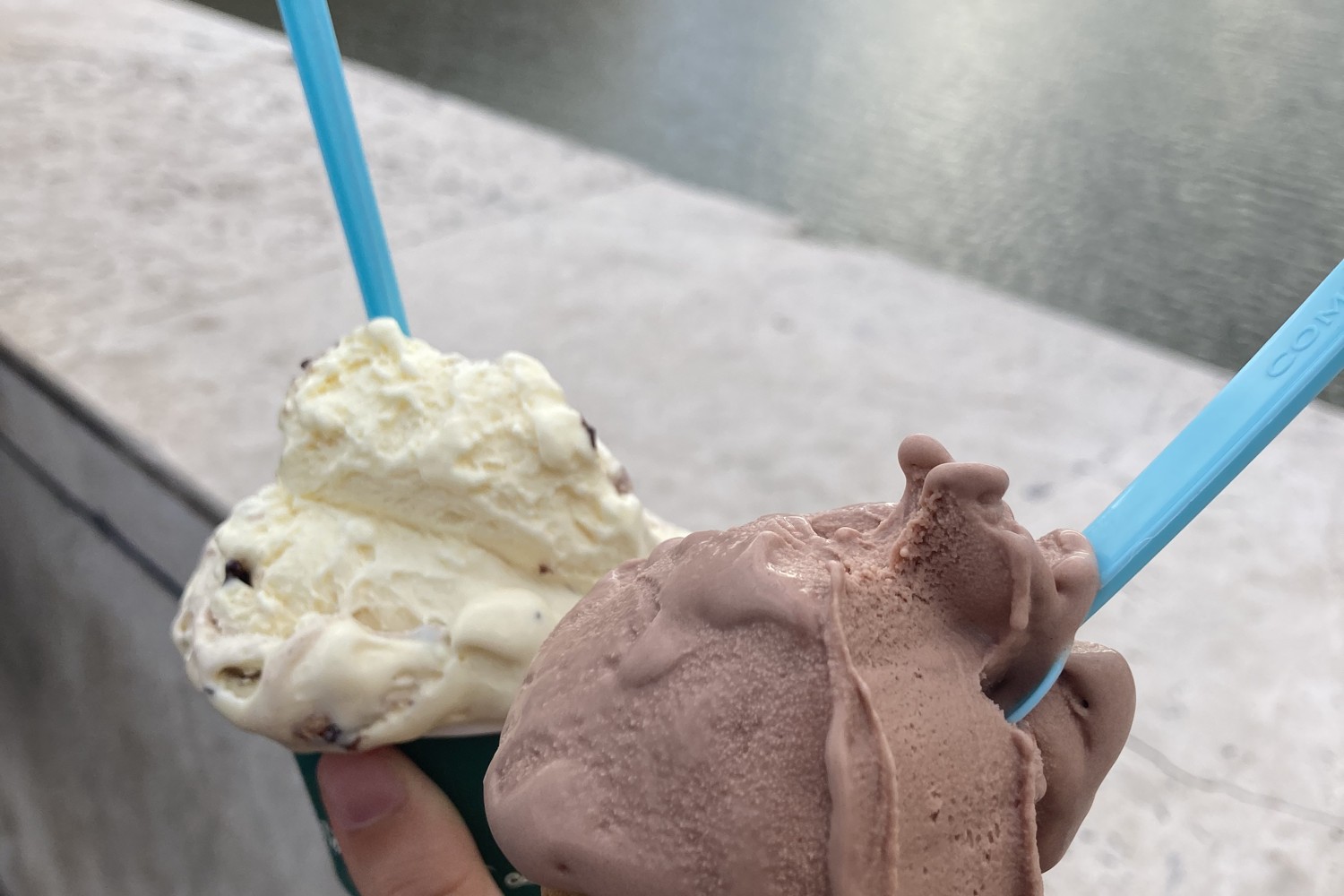
In Italy, gelato is often a craft that passes from one generation to the next. It also shows, more clearly than almost anything else, the difference between an artisanal product and an industrial one.
The Italian story of gelato differs from American ice cream. Not better. Just different. American factories turn out ice cream in volume and ship it as a commodity, while Italian gelato tends to stay artisanal and follow the quality and origin of its ingredients.
From Ice Pits to the Medici
The history of frozen desserts goes back much further than most people expect. Some believe early forms of ice cream appeared in China during the Shang Dynasty, where servants carried flavored ice to royalty. Over time, ice met milk, rice, honey, and sweet syrups.
From there, techniques traveled through the Arab world and into the Mediterranean. Italy, in fact, seems to have combined Greek, Chinese, and Arab influences to shape the frozen desserts we recognize today.
In Sicily, especially around Mount Etna, ice and snow survived long periods of storage. Because people understood ice pits and temperature control, experimentation flourished. The more control they gained over freezing, the more refined these desserts became.
Then comes the Renaissance.
Stories link frozen desserts to Catherine de Medici and European courts, although most accounts trace gelato as we know it to Florence and Bernardo Buontalenti, an artist and party planner for the Medici family. By adding milk and eggs, he created a creamier, more balanced frozen dessert that spread well beyond Tuscany.
In true Italian fashion, competition never stopped. Recipes evolved. Techniques improved. Today gelato is precise and balanced, and it rests on ingredient quality rather than volume.
That’s the centuries of craft behind every scoop you order in Pisa.
Why These Are the Top 5 Tuscan Foods in Pisa
These foods exist because of land, history, and necessity. They never tried to impress outsiders. They fed families.
Taken together, these are the top 5 Tuscan foods in Pisa that explain the city better than any guidebook ever could. For a wider view of where to eat and drink across the city, our full Pisa food and wine guide rounds up more spots beyond these five.
Conclusion
Pisa doesn’t shout its flavors. Instead, it trusts you to listen.
These are, in the end, the top 5 Tuscan foods in Pisa — five dishes that tell the story of a Tuscany that runs on patience, practicality, and deep respect for ingredients. Once you taste them properly, Pisa stops being a postcard and becomes something real.
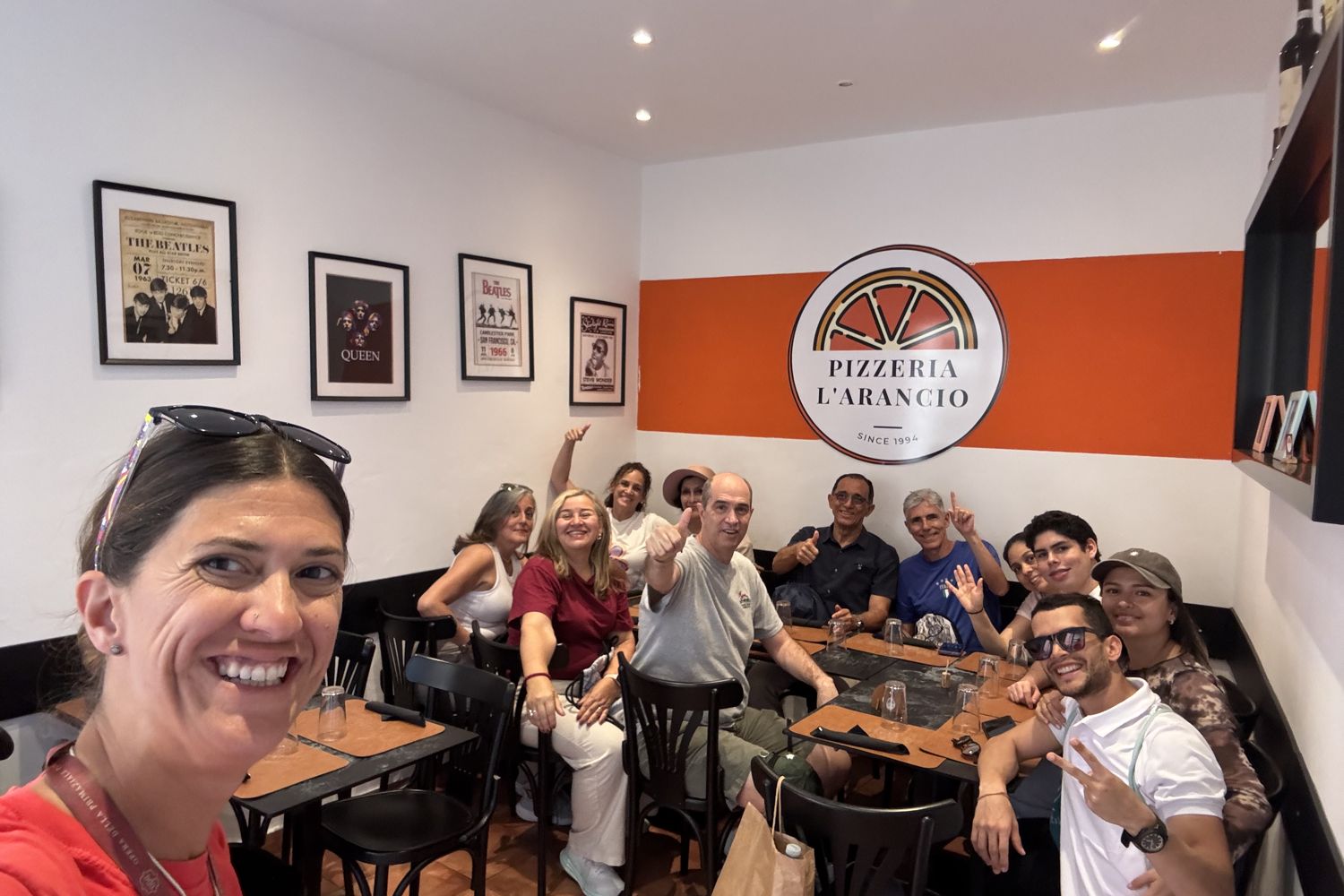
The easiest way to taste all five with the stories behind them is to join our Tastes of Pisa food experience. However, if you’d rather go at your own pace, our private Pisa food tour covers the same ground, just the two (or few) of you and a local guide.
Frequently Asked Questions About the Top 5 Tuscan Foods in Pisa
A classic tagliere, pappa al pomodoro, cecina, bomboloni, and gelato rank among the most iconic foods you can taste in Pisa.
Not exactly. It’s thicker than a soup, because the bread slowly cooks with tomatoes until it turns into a soft, spoonable “pappa.”
Historically, Tuscany taxed salt heavily, so bakers made bread without it. Over time, it became the perfect balance for salty foods.
Cecina is a chickpea flatbread with ancient roots. In Pisa, it’s a deeply local food that people still eat daily, often from bakeries.
Yes, the recipe is similar, but the name changes by region. In Pisa, locals insist on calling it cecina.
A bombolone is a soft Italian fried pastry, similar to a donut but without a hole, and the filling goes in after frying.
Yes. Italian gelato usually has less fat and air, and it focuses more on ingredient quality and balance.
Yes. You can taste these staples on our Tastes of Pisa food experience, or choose a private Pisa food tour for a more personal pace.


