

If you’re wondering about the best things to do Pisa besides the Leaning Tower, you’re in the right place.
Everyone knows Pisa for that famous tower. It leans, it dazzles, it’s on every fridge magnet in Tuscany.
However, if you stop there, you’ll miss the best part.
Because Pisa isn’t just a one-photo wonder. Instead, it’s a city made for wandering, listening, tasting, and being surprised. Once you’ve done your mandatory pose, it’s time to step off the postcard and discover what most visitors overlook.
Here’s how to explore the most meaningful things to do Pisa, one story at a time.

Visit the Cathedral and Baptistery in Piazza dei Miracoli
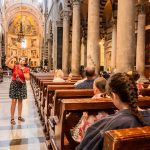
Yes, the Leaning Tower steals the spotlight. However, its neighbors — the Cathedral and the Baptistery — are where Pisa truly reveals its power.
Inside, you’ll find Giovanni Pisano’s pulpit. In fact, many historians consider it one of the earliest masterpieces of Gothic sculpture.
Before you leave, step outside and look closely at the north wall. There, you’ll notice strange scratches carved into the marble. According to legend, they are the Devil’s claw marks. When he tried to destroy the church, Pisa’s patron saint San Ranieri chased him away. Furious, the Devil scratched the stone.
The best part? No matter how many times you count them, locals swear you’ll never get the same number twice.
Then step into the Baptistery, the largest baptistery in the world. Its Romanesque arches rise into Gothic details, and its acoustics are legendary. Every 30 minutes, an attendant sings one clear note that multiplies under the dome like an invisible choir.
And somewhere beneath that dome, Galileo Galilei was baptized.
This is not just architecture. This is where Pisa began.

Explore the Camposanto Monumentale
Behind the Cathedral stands the Camposanto Monumentale, one of the most moving things to do Pisa.
Pisans built it to hold soil brought from Jerusalem. Over time, it became a monumental cemetery decorated with dramatic frescoes.
Then World War II changed everything. Bombs set the roof on fire and damaged much of the artwork. However, the tragedy revealed something extraordinary: beneath the frescoes, artists had drawn sinopie.
Today, you can still see those outlines preserved in the Museo delle Sinopie. It is the richest collection of its kind in the world.
Even in loss, Pisa found beauty.

Walk the Medieval City Walls
You’ve seen Pisa from the ground. Now see it from above.
Meanwhile, the crowds gather below. On the medieval walls, however, you’ll find silence. Built in the 12th century, they stretch nearly four kilometers around the historic center.
From the top, you’ll see the domes of the Cathedral, terracotta rooftops, hidden gardens, and the contrast between old and new Pisa.
Few visitors climb up here. That’s exactly why you should.

Piazza dei Cavalieri and the River
From Piazza dei Miracoli, follow the narrow streets south to Piazza dei Cavalieri.
Giorgio Vasari redesigned this square when Florence ruled Pisa during the Renaissance. Today it hosts the Scuola Normale Superiore, one of Italy’s most prestigious universities.
Meanwhile, students keep alive one of Pisa’s most famous superstitions.
Ask any oft if they’ve climbed the Tower and you’ll often hear the same answer:
“Not until I graduate.”
They are afraid that if they climb the Leaning Tower before finishing the exams, they’ll never graduate.
Then continue through Borgo Stretto, Pisa’s elegant shopping street shaded by medieval arcades. Eventually, you’ll reach the Lungarno.
Eventually, the streets open toward the Lungarno. At sunset, the Arno reflects pastel palaces. At the same time, the light softens and the city slows down.

Eat Like a Local
Exploring works up an appetite. And by now, you’ve definitely earned a break. Fortunately, one of the best things to do Pisa involves sitting down and tasting it.
If pizza is calling your name, grab a seat at Pizzeria L’Arancio, a neighborhood favorite near Piazza dei Cavalieri. Their pizza follows the traditional Pisan style: thin, crisp, and generously topped.
Meanwhile, if you prefer something truly local, order cecina: a golden chickpea flatbread that’s equal parts humble and addictive. Locals eat it plain or tucked inside focaccia like a Tuscan panino. Simple ingredients. Big flavor.
For a longer, slower meal, follow the locals to Ristoro Le Prata, right on the Lungarno. Their motto says it all: from farm to fork. Much of what you’ll eat comes directly from their own land or nearby producers. Expect seasonal pasta dishes, crunchy bruschetta with fresh tomatoes, and wine that tastes like summer evenings along the Arno.
And when it’s time for dessert? Stay right where you are.
Sweet Stops You’ll Thank Me For
Just next door, you’ll find I De Coltelli.
They serve the kind of gelato that quietly ruins all others for you. Everything is natural, local, and seasonal. Think fig and walnut in fall, lemon and basil in summer. Always fresh. Always made that day.
If you prefer something warm — and just a little sinful — head to Bombolove. Here, bomboloni (hot custard-filled doughnuts) are fried on the spot. Pisans even eat them as a beach snack in summer.
Because yes, in Pisa, even dessert comes with a story.
Modern Art and Hidden Surprises
Cross the Arno and walk along Corso Italia, the city’s lively shopping street.
Look up. Above modern storefronts, 18th-century frescoes still decorate hidden palazzi.
Then turn toward one of Pisa’s boldest surprises: Keith Haring’s Tuttomondo mural.
Painted in 1989, just months before his death, it bursts with color and movement. Medieval marble meets contemporary art. Tradition meets rebellion.
This contrast defines Pisa.

Why Pisa Stays With You
There’s a reason people remember Pisa long after they leave.
A Devil’s scratch.
A student’s superstition.
A fire that revealed hidden drawings.
A mural that brought color to stone.
These are the real things to do Pisa — not just monuments, but stories.
And if you want to hear those stories exactly where they happened, join a guided Tour. Because Pisa isn’t just something to see. It’s something to understand.
Frequently Asked Questions About Things to Do Pisa
Visit the Cathedral and Baptistery, explore the Camposanto, walk the medieval walls, stroll along the Arno River, and discover local food traditions.
Absolutely. Pisa offers art, history, architecture, street art, and authentic Tuscan cuisine beyond its famous monument.
Half a day covers the main monuments. A full day allows you to enjoy more things to do Pisa at a relaxed pace.
The Camposanto Monumentale is often overlooked, yet it holds extraordinary frescoes and historical significance.
Yes. Pisa is compact and flat. Most attractions are within 15–20 minutes walking distance.
Try cecina, pappa al pomodoro, fresh pasta, bomboloni, and artisanal gelato.
Yes. The walls offer panoramic views and a quieter perspective of the city.
A guided tour helps you understand the symbolism, legends, and hidden details that make Pisa unique.